

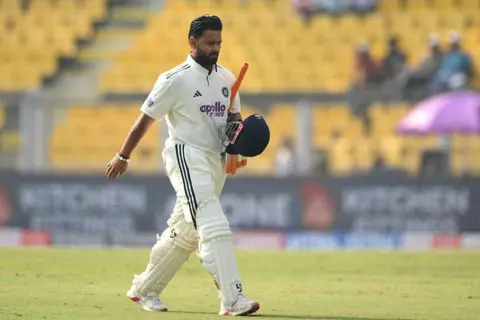
The Indian cricket team's surprising 0-2 loss to the Proteas in the recent red-ball series has left the team reeling.
Just days ago, the visiting team inflicted upon India their heaviest defeat in terms of runs, against all odds. This represented South Africa's first series win in the subcontinent in two and a half decades and India's another home failure in just one year after a decade-plus without a home loss.
The positive trajectory gained during the previous half-year has almost disappeared and the futures of a number of cricketers - including team coach the coach - now hang in the balance.
Early Optimism Disappears
The young team's strong showing in the UK this season, under a fresh leadership, suggested a successful handover after the close together retirements of stalwarts R Ashwin, Sharma, and Virat Kohli.
An easy 2-0 win over the Windies at the beginning of the domestic season enhanced that perception, before the Proteas turned up and handed out a fell blow.
The home side were a bit unlucky that skipper Gill got injured very early in the initial match and did not participate again in the contest. But that does not excuse or justify the team of the terribly sub-par display in the two games against South Africa.
A number of star cricketers took a hit, and several players hoping for long red-ball careers were revealed to be not up to the mark - technically or mentally - for the longer format.
A Troubling Pattern
It was the second whitewash in home conditions endured by the Indian team in just over a year. In 2024, little-fancied New Zealand had pulled off a remarkable 3-0 victory which essentially denied the hosts a spot in the World Test Championship (WTC) final.
The fresh failure to the Proteas could damage India's hopes of reaching the showpiece of this cycle too.
After being third in the Test championship standings prior to the contest, the side have been relegated to the fifth spot. Even though nine more Tests are yet to be played, five of these are against the Aussies. Ordinarily, playing at home would be a significant benefit - even against the mighty Aussies. Yet the debacles against the Kiwis and South Africa provide no basis for such assurance.
Roots of the Decline
The national team's frailty in red-ball cricket has been clearly revealed. Nevertheless, why the team have struggled so much in Test matches at home recently is continues to confuse.
From the year 2000 onwards, the Indian cricket team were considered unbeatable in Test cricket at home. In demanding climates and on surfaces that helped spin and benefited their players, the hosts brooked no opposition. The occasional loss, such as in the 2012-13 season against the English, was seen as an anomaly.
Today, India seem easy pickings on home turf.
Against New Zealand in last year and South Africa this year, the home side were hoisted by their own petard. The tracks they curated to help their style failed miserably, as opponents capitalized on them more skillfully, surpassing the home team's players when it mattered most.
What's Gone Wrong?
Certain analysts propose that the Indian team is struggling at home because local wickets have been modified from spinning tracks to fast tracks to train the squad to perform better overseas.
Others highlight that the Indian Premier League (IPL), in which many overseas players participate, has reduced the mystery and hardship Indian conditions would pose to them earlier.
While there is a degree of accuracy in these views, it still does not explain why India's performances on home soil have seen such a dramatic drop.

Multiple Failings
Most former players point to a complicated issue, not limited to a few causes.
Critics and players have pointed to multiple deficiencies post India's disappointing performance to the Proteas: not respecting the foe, poor preparation, flawed selections, excessive self-belief, frequent changes of the starting eleven, and favoring limited-overs over red-ball cricket.
This was clear in the displays of the team.
Players like Rishabh Pant and Yashasvi Jaiswal, of whom great things were anticipated, suffered for their lack of application, while Sai Sudarshan, Nitish Kumar Reddy, and Jurel - who were hoping to secure their place in the team - came up short in skill and mindset, facing the fallout for their nonchalant approach.
A small number - Ravindra Jadeja, Bumrah, Kuldeep, Mohammed Siraj and Washington Sundar - did justice to their talent and reputation - but inadequately to claim wins.
Leadership Under Fire
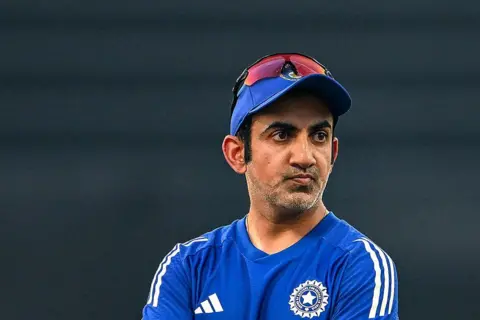
The analysis also included not only the cricketers - selectors and coaching staff were also questioned, driven by distraught fans and outspoken ex-cricketers. In the spotlight of the scrutiny was mentor Gambhir.
During his post-series press
